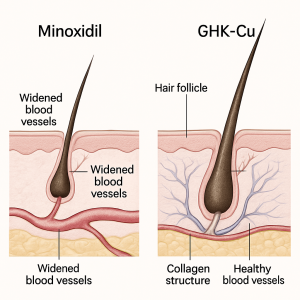
Copper Peptide GHK-Cu in 2026: Evidence-Based Review of Mechanisms, Benefits, and Safety By Isaac Introduction Copper peptide GHK-Cu, also known as glycyl-L-histidyl-L-lysine copper complex or copper tripeptide-1, has garnered significant interest in dermatology and regenerative medicine for its potential roles in skin repair, anti-aging, and wound healing
In some cases, this will not lead to oxidation to GSSG or other disulfide but rather formation of a stable S -conjugate with various compounds (Dixon and Edwards, 2010)
Unlike NSAIDs that block a single enzyme, therapeutic peptides target multiple interconnected mechanisms
Its role has been widely studied in the context of overall body function, particularly in maintaining oxidative balance
Research shows that this small tripeptide functions as a biological signaling molecule, activating pathways involved in wound healing, angiogenesis, and extracellular matrix remodeling