But important limitations exist: Most research is in animals, not humans Long-term safety beyond 12 weeks is uncharacterized Drug interactions haven't been formally studied Cancer relationship remains unclear Who should consider BPC-157: Those researching recovery support for injuries or gut issues Individuals willing to accept calculated risk with an experimental peptide People who can work with a knowledgeable healthcare provider Who should avoid it: Those with active cancer or high cancer risk Anyone on medications that might interact (especially cardiovascular, dopamine-affecting) Individuals unwilling to monitor their response carefully If you choose to use BPC-157, start conservatively (200 mcg daily), use proper injection technique, source from reputable suppliers, and track your body's response
Compound 1 was isolated by silica gel column chromatography using a dichloromethane/methanol (DCM:MeOH = 60:1, V/V) eluent (yield: 80%)
Firstly, the synthesis of GSH-depleted multicomponent nanomedicines is so time-consuming that it still faces a huge technological gap from laboratory preparation to industrial production (Klochkov et al., 2021)
SLCO/OATP-like transport of glutathione in FASL-induced apoptosis: glutathione efflux is coupled to an organic anion exchange and is necessary for the progression of the execution phase of apoptosis
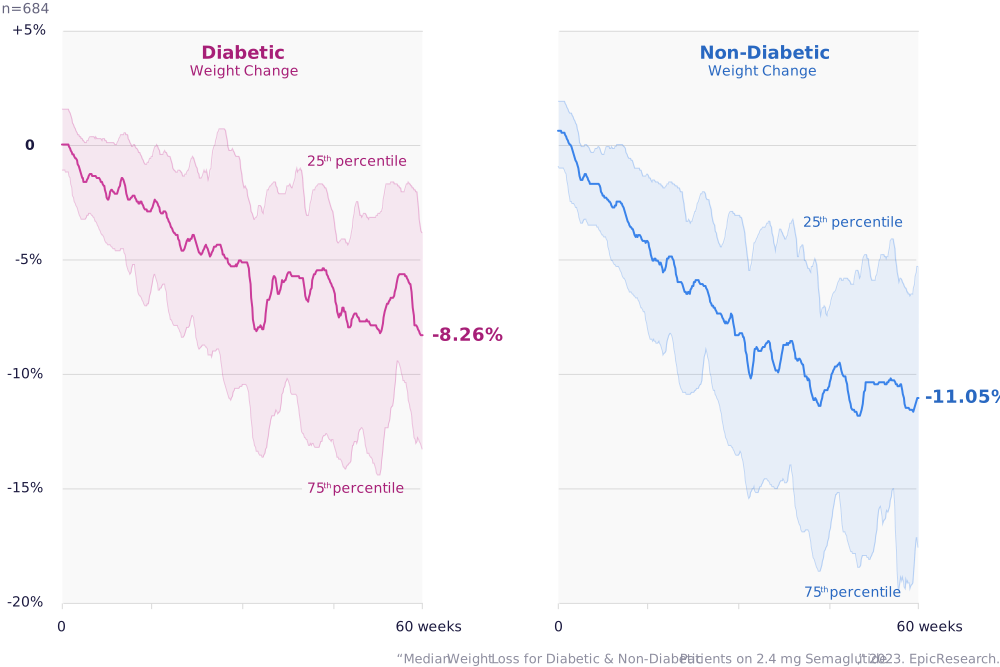
Semaglutide vs Tirzepatide for weight loss in adults with overweight or obesity